Wednesday, September 24, 2014

Genes Connection: TNF-a gene and PANDAS

Genes and PANDAS (Pediatric Autoimmune Neuropsychiatric Disorders Associated with Streptococcal Infections)

http://www.ncbi.nlm.nih.gov/pmc/articles/PMC3758727/


PANDAS has been found to often show up in family lineage. Identifying the root cause of this syndrome is pivotal for our children's future and grandchildren's future.

New Study: Association between pediatric autoimmune neuropsychiatric disorders associated with streptococcal infections disease and tumor necrosis factor-α gene−308 g/a, −850 c/t polymorphisms in 4-12-year-old children in Adana/Turkey


Pediatric Autoimmune Neuropsychiatric Disorders Associated with Streptococcal Infections (PANDAS) is a newly defined disease in neuropsychiatry and occurs with an autoimmune mechanism after Group A Beta Hemolytic Streptococcus (GABHS) infection. Tumor necrosis factor (TNF), encoded by TNF-α gene has an important role in the apoptotic mechanisms of autoimmune diseases. Recently, TNF-α polymorphisms and autoimmune/psychiatric disorders have been reported to be related. In this regard, we focused on to investigate a possible relation between the TNF-α gene promoter region−308 G/A and − 850 C/T polymorphisms and PANDAS.


This is small study of 38 children of Turkish descent identified a gene many nationalities carry. This TNF-a gene has been found to be related to many autoimmune diseases. When this gene is present, a child's immature immune system is even more likely to overreact during an infection. 


The research states: "...the most compelling aspect of our research is the finding that TNF-a -308 ...polymorphysim was detected in 86.5% of (PANDAS) patients but not in controls..."  


They also point out that damage to the psychiatric well being of children may increase if treatment is not administered. This gene rests on a "fragile site" in a chromosomal region which likely increases susceptibility issues to autoimmune illness.


Conclusion: They propose that TNF-α −308 AA polymorphism can be regarded as a definitive and molecular indicator of PANDAS, however  findings should be supported by further research on this issue.


To learn more about the TNF-a gene, visit http://en.wikipedia.org/wiki/Tumor_necrosis_factor_alpha


Thursday, September 11, 2014

Vitamin D important for good health

Vitamin D important for good health by Terrie McArthur

http://www.thespectrum.com/story/life/features/mesquite/2014/09/08/vitamin-d-important-good-health/15300723/

Okay, I'm older now and the brain seems a little uncooperative sometimes.

I hate it when the data just seems to be lost, but my spouse says I just need a new hard drive.

But maybe there is more to it.

I came across an article by Dr. Joseph Mercola, alternative medicine proponent and osteopathic physician, who has a website and writes about health and nutrition. This article was about vitamin D.

"Vitamin D research has repeatedly shown that vitamin D can improve a number of brain disorders, including depression and dementia — the most devastating form of which is Alzheimer's disease," Mercola writes. "Vitamin D receptors appear in a wide variety of brain tissue early in the fetal development, and activated vitamin D receptors increase nerve growth in your brain.

"Researchers believe that optimal vitamin D levels may enhance the amount of important chemicals in your brain and protect brain cells by increasing the effectiveness of the glial cells in nursing damaged neurons back to health," Mercola says in his article. "Vitamin D may also exert some of its beneficial effects on your brain through its anti-inflammatory and immune-boosting properties. So, all of us need to get a little more vitamin D."

Vitamin D deficiency drastically raises your risk for dementia.

Mercola says a recent study shows seniors who have low vitamin D may have double the risk of dementia and Alzheimer's disease compared to those with vitamin D levels in the normal range.

Mercola says

Those with low levels of had a 53 percent increased risk for dementia, and a 70 percent higher risk of Alzheimer's.

Severely deficient individuals had a 125 percent higher risk for dementia and 120 percent higher risk for Alzheimer's.

Mercola says that research has found a link between depression and dementia and between depression and dementia and vitamin D deficiency and depression. One significant study found that higher levels of depression translated into greater risk for dementia later on.

"The severity of the depression was also linked to the speed of memory decline—the worse the depression, the faster the decline in memory," Mercola says, quoting lead researcher Robert S. Wilson.

"These findings are exciting because they suggest depression truly is a risk factor for dementia, and if we can target and prevent or treat depression and causes of stress we may have the potential to help people maintain their thinking and memory abilities into old age," Mercola says.

This explains why people who live in northern climates where the sun rarely shines suffer from greater levels of depression. I know I do. The root of the problem is likely to be lack of vitamin D, a vitamin produced by your body when exposed to sunlight.

In one previous study, seniors with the lowest levels of vitamin D were found to be 11 times more prone to be depressed than those who had normal levels.

More recent research was discussed in a Times Online article.

"The Amsterdam research, which tracked over 1,200 people aged 65 to 95, showed that blood vitamin D levels were 14 percent lower in individuals with major and minor depression compared with non-depressed participants," says the article. "A study in the United States indicated that vitamin D deficiency occurred more often in certain people, including African-Americans, city dwellers, the obese, and those suffering from depression.

"People with vitamin D levels below 20 ng/mL had an 85 percent increased risk of depression compared to those with vitamin D levels greater than 30 ng/mL," says the article.

Not only is lack of vitamin D associated with seasonal affective disorder, but also with fibromyalgia. High doses of vitamin D seem to help with these problems.

It may also help with diabetic pain and depression. In one study participants who reported neuropathic pain were given 50,000 IUs of vitamin D2 once a week for six months. At follow-up, both depression and pain scores had improved.

Researcher Todd Doyle, Ph.D., says vitamin D supplements are "a promising treatment for both pain and depression in type 2 diabetes."

Mercola encourages those looking to supplement to use vitamin D3 rather than the prescribed D2, saying, "previous research suggests vitamin D2 might do more harm than good in the long term."

He goes on to describe an Indian study that found vitamin D and calcium supplements combined with exercise can prevent a complete onset of diabetes.

In any case, both are part of diabetes prevention.

Other sources back Mercola up. Nephrology News reported in an article the deficiency has been linked to high blood sugar levels, though not enough to be considered diabetes. This condition is known as prediabetes.

It's unclear whether or not bringing up vitamin D levels will affect the progression to diabetes, according to Nephrology News.

Mercola's interpretation of the study is that supplements decreased the risks by 8 percent.

"Without healthy lifestyle changes, nothing works to prevent diabetes in at-risk individuals," wrote the lead author of the study Deep Dutta.

Mercola points out the addition of the supplements of vitamin D and calcium is easy and a low-cost option.

Sadly a www.MedicineNet article reported findings that a percentage of senior citizens seen in American emergency rooms are malnourished or at risk of being malnourished. Having primary care physicians and health insurance didn't seem to make a difference.

www.MedicineNet reported seniors most likely to suffer from the lack of proper vitamin intake were those who suffered from depression, were in assisted-living, had difficulties with their dentures or dental pain or had problems shopping for food.

I take this to mean those seniors who are malnourished also suffer from a lack of vitamin D. These are important to health, including to seniors.

Everyone is in charge of their bodies. Do the research and decide for yourself if you are vitamin D deficient.

I take some as a matter of course.

Just because we live in the desert with lots of sun doesn't mean we are immune to the deficiency.

Go online to www.mercola.com to read more.

If seniors are malnourished, then they most likely have a vitamin D deficiency. Vitamin D and calcium are inexpensive and import to senior health. You are in charge of your body, so you need to do the research and see if you are in need of more vitamin D. I take some as a matter of course.

You will have people tell you that because we live in a climate with lots of sun this isn't necessary, but remember that ancient humans were mostly naked, so their skin was always exposed to the sun.


Thursday, September 4, 2014

How to reduce your mercury exposure from seafood from Consumer Reports

http://www.consumerreports.org/cro/news/2014/08/how-to-reduce-your-mercury-exposure-from-seafood/index.htm

How to reduce your mercury exposure from seafood

This resources page will help you make safer choices

Published: August 21, 2014 06:00 AM


How much mercury is in your favorite seafood?   |  Mercury calculator 

Will eating grilled swordfish or tuna sushi expose you to too much mercury? Find out by using the Got Mercury? calculator, provided by Turtle Island Restoration Network. Just enter your body weight, along with the type and amount of fish or shellfish you’re considering eating for the week, and you’ll see how much you will be over or under the maximum acceptable dietary limit for mercury set by the Environmental Protection Agency.

What you find out may surprise you. Just one 6-ounce serving of swordfish would expose a 195-pound adult to more than two and a half times the safety limit for mercury. A 150-pound adult would get about three and half times the limit.

Read our special report on seafood and mercury. And check out "Sick From Sushi," which details how one fish lover felt the effects of mercury.

The FDA’s “avoid” list for the most vulnerable groups such as young children currently includes swordfish, shark, King mackerel and Gulf tilefish,  but some fish that aren't even on that list can pose significant overexposure risks. For instance, a child weighing 46 pounds (about the average weight for 5-year-olds in the U.S.) would get double the EPA limit for mercury in a 3-ounce serving of Chilean sea bass and more than triple that limit for a 5-ounce serving, both of which are within the weekly fish consumption amounts the FDA suggests for children under age 6.

To see how much mercury exposure you’d get from eating a mix of different types of seafood during the week, select the advanced mode option on the calculator. For example, a 150-pound woman who eats 4 ounces of bigeye tuna (also known as ahi, it's often used in tuna sushi), 4 ounces of Chilean sea bass, and 4 ounces of halibut during the week would get a dose of mercury that is nearly triple the EPA limit. Simply by switching to sushi made with 4 ounces of salmon rather than tuna, and opting for 4-ounce servings of haddock and flounder instead of the sea bass and halibut, she would be at 29 percent of the maximum acceptable intake for mercury. 

Consumer Reports has prepared a list of 20 low-mercury fish that consumers can eat frequently and still remain with safe mercury levels. You'll find safer seafood choices in our special report "Can Eating the Wrong Fish Put You at Higher Risk for Mercury Exposure?"

How much mercury is in your favorite seafood?

Check out the databases listed here for more detailed information on the amounts of mercury found in various types of fish and shellfish sold at fish markets, grocery stores, and other commercial locations. Tables display the average (mean) as well as minimum and maximum mercury levels detected for each type of fish:

FDA data on mercury levels in commercial fish and shellfish

Shows results of the agency's tests for mercury in fish from 1990 through 2010, which our food safety experts analyzed as the basis for making our recommendations. FDA data is commonly used as a basis for mercury risk assessment and exposure estimates by scientific researchers and some state government officials.

Stony Brook University Seafood Mercury Database (PDF)

This resource combines the FDA’s results with data from other federal and state reports, along with mercury test results from studies published in scientific journals. The average (mean), minimum and maximum mercury levels displayed for each type of fish are based on aggregated test results from approximately 300 different sources, and the table includes some species of fish not found in the FDA’s data.

Learn more about the health effects of mercury in fish

The EPA provides helpful details on the sources of mercury exposure and an explanation of the EPA “reference dose” for methylmercury, which is the maximum acceptable daily exposure that the agency estimates is unlikely to cause harmful effects over a lifetime:

Get information about the health effects that could be caused by eating too much high-mercury seafood.

What you need to know about locally caught fish

If you catch your own fish or eat seafood caught by others at local streams, lakes, or beaches, check to see whether state or local health authorities have issued any advisories about PCBs or other seafood contaminants in nearby waters.

In various parts of the U.S., there is little or no monitoring for contaminants in fish in some local waters. If no current local fish-advisory information is available for your area, federal officials recommend that adults eat no more than 6 ounces per week. For children under the age of 6 years old, the recommended limit is 1 to 2 ounces per week, for 6-to-12-year-olds, the limit is 2 to 3 ounces per week. (Both of these age groups and adults should avoid eating any other type of fish that week.)

Get more safety tips about eating fish that you catch yourself.


Tuesday, September 2, 2014

Remove Vaccine Safety Oversight from DHHS by Barbara Loe Fisher

Remove Vaccine Safety Oversight from DHHS by Barbara Loe Fisher 


On Aug. 27, 2014 a senior scientist at the Centers for Disease Control publicly admitted that he and other CDC officials, including the current CDC's Director of Immunization Safety, published a study about MMR vaccine safety in 2004 that "omitted statistically significant information" and "did not follow the final study protocol." He said the study "omitted relevant findings in a particular study for a particular sub group for a particular vaccine" and added that "there have always been recognized risks for vaccination" and "it is the responsibility for the CDC to properly convey [vaccine] risks."


CDC: A History of Limiting Transparency


We couldn't agree more. CDC officials should not be in the business of deliberately withholding information from the public about vaccine risks that may be greater for some children than other children. Unfortunately, CDC officials have a long history of limiting transparency and being less than honest with the American people about what it does and does not know about vaccine risks.


Read the rest of this commentary, watch a video, access references and make a comment here.


Click here to read NVIC's Sept. 2, 2014 Press Release "National Vaccine Information Center Calls for Removal of Vaccine Safety Oversight from Department of Health and Human Services."


New research indicates vitamin D may help slow progression of Alzheimer's disease

New research indicates vitamin D may help slow progression of Alzheimer’s disease

http://www.vitamindcouncil.org/vitamin-d-news/new-research-indicates-vitamin-d-may-help-slow-progression-of-alzheimers-disease/?mc_cid=c87e85f3c3&mc_eid=ec1651b17f


Researchers out of Argentina have found that patients treated with vitamin D experienced a slower progression to more severe stages of Alzheimer’s disease.

Alzheimer’s disease (AD) affects one in nine people older than 65 years old and is characterized by a loss of memory and changes in behavior. AD is a progressive condition meaning that it develops slowly and gets worse over time.

Receptors for vitamin D in the brain have led researchers to become interested in how vitamin D affects the development and the management of AD.

Vitamin D deficiency is reported to increase risk of developing AD, while maintaining sufficient vitamin D levels may reduce the number of plaques that develop with AD.

To help understand vitamin D’s complete role in AD, Dr. Marcelo Chaves and colleagues looked at how treatment of vitamin D affects the progression of the disease.

They recruited 202 patients with mild AD who had at least four years of follow-up data. The researchers were interested if vitamin D treatment, cardiovascular risk factors, osteoporosis, treatment with memantine, or acetylcholinesterase inhibitors (ACE inhibitor) drugs affected the progression of AD.

Memantine is a drug specifically designed to treat AD, and ACE inhibitors are drugs used to treat the symptoms of dementia in general. The researchers looked at these factors over the course of four years to determine how they were related to disease progression.

They found that vitamin D affected time of AD progression independently of the other factors analyzed. Patients treated with vitamin D had slower AD progression and took one year longer to develop to a more severe stage compared to those not treated with vitamin D.

“Treatment with vitamin D may be an independent protecting factor in the progression of Alzheimer’s disease,” the researchers concluded.

Source

Chaves, M. et al. Treatment with vitamin D and slowing of progression of severe stage of Alzheimer’s disease. Vertex, 2014.


Wednesday, August 27, 2014

Fraud at the CDC uncovered, 340% increased risk of autism hidden from public - CNN iReport

Fraud at the CDC uncovered, 340% increased risk of autism hidden from public
http://ireport.cnn.com/docs/DOC-1164794

By eplettner  | Posted August 24, 2014  | Seminole, Florida

CNN PRODUCER NOTE    CNN iReport is the network's user-generated news community. This story was initially pulled for further review after it was flagged by the community. CNN has reached out to the CDC for comment and is working to confirm the claims in this iReport.

UPDATE - 8/27/2014 12:16 EST

A top researcher at the Centers for Disease Control and Prevention (CDC) played a key role in helping uncover data manipulation by the CDC. This fraud obscured a higher incidence of autism in African-American boys. The whistleblower, Dr. William Thompson, came forward after a Freedom of Information Act (FOIA) request for original data on an autism study was filed and these highly sensitive documents were received with the assistance of U.S. Representative Darrell Issa, Chairman of the House Oversight and Government Reform Committee. The CDC documents and discussions with the whistleblower reveal widespread manipulation of scientific data and top-down pressure on CDC scientists to suppress a causal link between the MMR vaccine and later autism diagnosis, particularly in a subset of African-American males who received their immunization "on-time" in accordance with the recommended CDC schedule.


The received documents from the CDC show that in 2003 a 340% increase in autism in African American boys related to the MMR vaccine was discovered and then hidden due to pressure from senior officials. The CDC researchers then recalculated their results by removing a population to get the results that were desired.

William Thompson has worked for the government agency for over a decade and confirmed that "the CDC knew about the relationship between the age of first MMR vaccine and autism incidence in African-American boys as early as 2003, but chose to cover it up." He remarked "we've missed ten years of research because the CDC is so paralyzed right now by anything related to autism. They're not doing what they should be doing because they're afraid to look for things that might be associated." He alleges criminal wrongdoing by his supervisors, and he expressed deep regret about his role in helping the CDC hide data.

Thompson's revelations call into question the nine other studies cited by the CDC as evidence denying a link between vaccines and autism. They also have spurred a change.org petition to have the fraudulent study retracted from the Journal of Pediatrics, which published it in 2004.

A recently released memo from 2004 of Dr. Thompson expressing concerns to Dr. Gerberding, the head of the CDC at the time, about this problematic study has citizens upset. Does this mean Dr. Gerberding could have committed perjury during a congressional hearing? More investigation will be needed to know. A copy of the letter obtained under FOIA can be found here. http://www.naturalnews.com/images/CDC-Gerberding-Warning-Vaccines-Autism.jpg

Regardless many citizens view this as a deliberate malfeasance at the taxpayers' expense have begun a social media blitz to inform others of this story as it unfolds. Using the Twitter hashtags #CDCwhistleblower and #CDCfraud. Parents are hoping to have the agency held accountable for its role in any cover-up and are demanding an investigation on whether Dr. Coleen Boyle also perjured herself in testimony before Congress when addressing concerns of a potential vaccine-autism link.

The US Department of Health Resources and Services Administration has already recognized autism as a secondary cause of vaccine injury as documented in the Update to the Vaccine Injury Table following the 2011 IOM report. They did reject Autism as a direct adverse effect of the MMR specifically, but in view of these revelations that may be revisited.
http://hrsa.gov/vaccinecompensation/iomreportupdate030812.pdf

More on this story from Yahoo News!
http://finance.yahoo.com/news/study-focus-autism-foundation-finds-133000584.html

The peer reviewed analysis of the original CDC data showing a 340% increase in autism in African American boys due to the MMR vaccine can be found here
http://www.ncbi.nlm.nih.gov/pubmed/25114790

CBS coverage can be found at

http://www.cbs46.com/story/26316561/focus-autism-releases-findings-on-2003-cdc-autism-study-higher-autism-rate-among-african-american-boys-receiving-mmr-shot-earlier-than-36-months#.U_noAOE5EeE.twitter

UPDATE: CDC responds to claims stating that they recognize this study showed an increased risk of autism from the MMR:

"findings revealed that vaccination between 24 and 36 months was slightly more common among children with autism, and that association was strongest among children 3-5 years of age."

They dismissed this with an assumption that parents with children that have autism rushed to get vaccinated for school.

"most likely a result of immunization requirements for preschool special education program attendance in children with autism."

This raises questions as there are immunization requirements for all children attending public school and they already excluded children that had a vaccine exemption, so this should not have differed from the controls.

The CDC also states that "Additional studies and a more recent rigorous review by the Institute of Medicine have found that MMR vaccine does not increase the risk of autism". The Studies that the CDC uses to confirm no link between the MMR and autism are 4 that they list on their website at (http://www.cdc.gov/vaccinesafety/Vaccines/MMR/MMR.html ). A quick look at these 4 studies raises several questions.

  • One is the study talked about in this article showing a significant connection
  • A second was done by the infamous Dr. Thorsen who is awaiting extradition to the US on Fraud and is listed on the CDC's most wanted list putting any of his work into question and this is outside of other potential problems with the study that have been brought up.
  • A third is an exploratory study of very small sample sizes, 28 children total, making this unreliable. http://www.ncbi.nlm.nih.gov/pmc/articles/PMC2526159/

The last one also used a small control sample size of only 31 children and relied on parent interviews to provide medical and behavioral information. Beyond that they did find that over half (50%) of children with autism did regress shortly after the MMR vaccine (<5 months) even though they then concluded there was no connection. http://www.bu.edu/autism/files/2010/03/2006-Richler-et-al-MMR-Vaccine1.pdf

This begs the question as to why there are only these four studies used to support the claims that the MRR is safe and yet a quick search of PubMed finds A 2012 peer reviewed research paper studying over 500,000 children that found significant increase adverse effects after certain MMR vaccinations including a 22 Times increased risk of meningitis, 500% increase risk of febrile seizure, and other major side effects including a blood clotting disorder.

http://www.ncbi.nlm.nih.gov/pubmed/22336803

The full CDC statement can be seen here

http://www.cdc.gov/vaccinesafety/Concerns/Autism/cdc2004pediatrics.html

UPDATE: Autism Speaks reports that "Regressive Autism Reported Twice as Often among African American Children" http://www.autismspeaks.org/science/science-news/regressive-autism-reported-twice-often-among-african-american-children It would seem to be directly connected to the recent release of documents CDC documents and admissions by CDC Government researcher William Thopmson. This at least bears looking into.

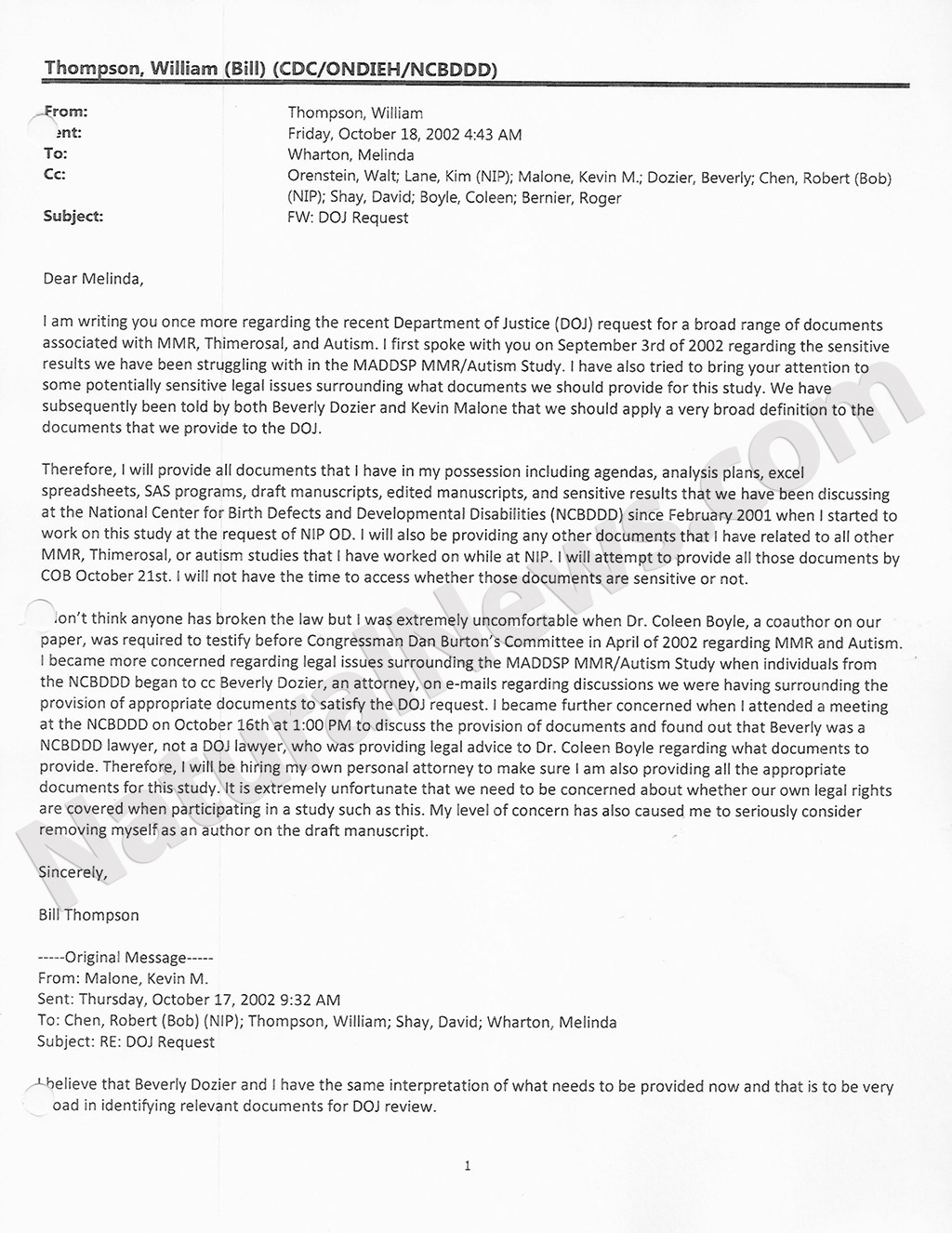
A recent release of another document shows that William Thompson was so concerned with the report, in light of a 2002 Department of Justice (DOJ) investigation, that the he considered removing his name from the paper. In light of his recent statements and released documents could all of the lawyers involved have been to try and prevent information release? Credit to NaturalNews for the release of this information: http://www.naturalnews.com/images/CDC-DOJ-Investigation-MMR-Vaccine-Autism-NN-Watermark.jpg


__,_._,___

Tuesday, August 26, 2014

New post in CDC whistleblower on cover up - MMR and Autism

New post on the CDC whistleblower for a cover up of study showing connection between the MMR vaccine and autism.

Here is Dr. Andrew Wakefield's short 9 minute film on it at: http://vimeo.com/user5503203/review/103711143/91f7d3d4d8

__,_._,___

Vitamin D deficiency and low bone mass found in adolescents with eating disorders

Vitamin D deficiency and low bone mass found in adolescents with eating disorders

https://www.vitamindcouncil.org/vitamin-d-news/vitamin-d-deficiency-and-low-bone-mass-found-in-adolescents-with-eating-disorders/?mc_cid=6d01541858&mc_eid=ec1651b17f

A new study published in International Journal of Eating Disorders found vitamin D deficiency to be very prevalent among adolescents with eating disorders.

Patients with eating disorders are at high risk for osteoporosis and other bone-related disorders. Osteoporosis is when bones become very weak over time so that even a slight fall can cause a fracture.

This increased risk comes from eating less, consuming low amounts of important nutrients, and having subsequent low body weight.

In females, low body weight can cause the body to stop producing estrogen which contributes to loss of bone density. People with anorexia, an eating disorder characterized by intense food restriction, the body produces an excess of the hormone cortisol which is known to contribute to bone loss.

This is especially important in children and adolescents as it is a time of growth in which bone development is extremely important.

Knowing vitamin D’s role in bone health and in reducing the risk of osteoporosis and osteomalacia, researchers from Israel recently conducted a study on vitamin D levels in adolescents with eating disorders.

They recruited 87 adolescents aged 14 to 18 years old who had anorexia nervosa, bulimia nervosa, or other eating disorders. They measured the vitamin D levels, bone mineral density as well as other nutritional markers.

The researchers found that 83% of the patients had vitamin D levels lower than 32 ng/ml, the commonly determined level in which bone growth is maintained. They also found that lumbar spine bone mineral density was low.

“Given the risk of osteoporosis in this population, 25(OH)D levels found in this group may not offer optimal bone protection,” the researchers conclude.

“Vitamin D levels should be routinely checked and supplementation should be administered as required.”

Source

Moses-Modan, D. et al. High prevalence of vitamin D deficiency and insufficiency in adolescent inpatients diagnosed with eating disorders. International Journal of Eating Disorders, 2014.


Tuesday, August 19, 2014

New study finds vitamin D deficiency is related to food allergies and eczema in infants

New study finds vitamin D deficiency is related to food allergies and eczema in infants


http://www.vitamindcouncil.org/vitamin-d-news/new-study-finds-vitamin-d-deficiency-is-related-to-food-allergies-and-eczema-in-infants/?mc_cid=fe0f868640&mc_eid=ec1651b17f

A recent study published in Journal of Pediatrics suggests that infants with vitamin D deficiency are at an increased risk for food allergies than infants with vitamin D sufficiency. The study also found that the severity of eczema may be related to vitamin D status.

Eczema, also known as atopic dermatitis, is an inflammatory condition that makes your skin red and itchy. The condition often causes the skin to crack and form lesions, creating an area prone to infection.

It is known that eczema is more common at a young age, with about half of all cases clearing up by 18 months of age. Allergies are also more common at a young age.

Vitamin D is of interest in both eczema and allergies because of its ability to reduce inflammation and regulate the immune system. Research on allergies has revealed that both low and high levels of vitamin D may contribute to the development of allergies.

Researchers from Korea enrolled 226 infants with eczema or food allergies to compare vitamin D status to the prevalence and severity of both conditions.

The participants with food allergies were categorized based on their number of food allergies and the severity of food allergies. The participants with eczema were assigned a score to represent the degree of severity of the condition.

The researchers found that infants with more than one food allergy had significantly lower vitamin D levels than infants without food allergies or with only one food allergy. Infants with vitamin D deficiency were more likely to have food allergies, especially to milk and wheat.

In the infants with eczema, the severity of eczema was significantly associated with vitamin D levels.

“Our results suggest that vitamin D deficiency increases the risk of sensitization to food allergens and that atopic dermatitis may be more severe in infants with vitamin D deficiency,” the researchers conclude.

Further clinical trials are needed to investigate the treatment of food allergies and atopic dermatitis with vitamin D supplementation.

Source

Baek J. et al. The Link between Serum Vitamin D Level, Sensitization to Food Allergens, and the Severity of Atopic Dermatitis in Infancy. Journal of Pediatrics, 2014.


Thursday, August 14, 2014

Back-to-school Vaccines: Know the Risks and Failures by Barbara Loe Fisher (share!)

Back-to-school Vaccines:  Know the Risks and Failures by Barbara Loe Fisher 


Watch her video a 9 minute video here:  http://www.nvic.org/NVIC-Vaccine-News/August-2014/Back-to-School-Vaccines--Know-the-Risks-and-Failur.aspx

As summer comes to an end, the drumbeat promoting back-to-school vaccinations grows louder and louder in America. Unlike children in Canada and the European Union,1 2 our children must get dozens of doses of vaccines or they can’t get a public school education.3

No Shots, No School, No Exceptions

Over the past century, denial of a public school education has been used like a club by public health and medical trade officials demanding that state legislators enact “No Shots, No School, No Exceptions” vaccine laws.4 5 6 7 8 9 10 11 12 In 1914, children had to get one dose of smallpox vaccine to go to school.13 In 2014, children entering kindergarten must get a minimum of 29 doses of 9 vaccines.14 Babies enrolled in daycare get even more vaccines.15

Medical Exemptions Rarely Granted

Parents in 48 states can file a religious or personal belief vaccine exemption but some states make those exemptions very hard to get.16 A medical exemption is allowed in all states but doctors rarely grant them to children anymore because almost all medical reasons for delaying or withholding a vaccine have been eliminated.17 18 19

Government and medical trade officials have narrowed medical contraindications to vaccination after Congress shielded doctors and vaccine manufacturers from vaccine injury lawsuits.20 Today, even children with severely compromised immune systems are given most vaccines.21

Doctors Practicing Authoritarian Medicine

Now that everybody is a candidate for vaccination all the time, liability free doctors have been given a green light to practice authoritarian medicine.22 23 24 Distraught parents are contacting NVIC and telling us that pediatricians are dismissing their child’s vaccine reactions as unimportant and refusing to make a report to the federal vaccine adverse events reporting system. Mothers describe how pediatricians are screaming at them if they decline a vaccination or simply ask for fewer shots to be given to their child on the same day.25

Recently, a member of the American Academy of Pediatrics26 proclaimed publicly that he is justified in getting angry at and discriminating against parents disobeying his orders to give their children every federally recommended vaccine on schedule27 which, by the way, means 49 doses of 14 vaccines between day of birth and age 6 with 20 more doses of vaccines by age 18.28

Calling those parents “a public health menace” and comparing them to “substance abusers,” he refuses to treat their children. He said – QUOTE - “That person is a danger, not only to themselves but is a danger to society, a danger to other children in my practice, a danger to old people, a danger to everyone.”29

Pediatricians Exempt from Vaccine Injury Lawsuits

It is sad and frightening when doctors demonize and threaten parents making thoughtful medical risk decisions for their children. The American Academy of Pediatrics knows that vaccines carry serious risks for some children because AAP leaders successfully lobbied Congress to be exempt from vaccine injury lawsuits.30 31

Some People More Susceptible to Vaccine Reactions

If you or your child are tested positive for the MTHFR gene mutations, you have between a 20% to as high as 70% reduction in your capacity to detoxification from heavy metals in all vaccines.  You can do a simple ONCE IN A LIFE TIME easy at home saliva test for $99 - $150 to see if your child has this genetic MTHFR mutation to before you vaccinate.  I urge all parents to know their child’s MTHFR status before vaccinating.  
Read and learn more here:
www.homeopathyforwomen.org/MTHFR.htm

But even if $3 billion dollars in federal vaccine injury compensation had not already been awarded to vaccine victims in America,32 and even if the Institute of Medicine had not published a series of reports confirming that vaccines can cause injury and death,33 34 35 36 37 everybody knows that people do not all respond the same way to pharmaceutical products38 like vaccines

Each one of us is born with unique genes and a unique microbiome39 influenced by epigenetics,40 which affects how we respond to the different environments we live in. Some of us are more susceptible to vaccine complications.41 42 Public health officials have known this for a long, long time.43 44

Learn How to Identify Vaccine Reaction

With so many pediatricians denying vaccine risks and failures, it is even more important for parents to do their own research. If your child is getting back-to-school shots, you should know how to identify symptoms of a vaccine reaction. Once your child has had a vaccine reaction, revaccination may cause a more serious reaction.45 Plus, you only have two years to file a claim in the federal vaccine injury compensation program after a vaccine-related death or three years after a vaccine injury.46 47

A few of the more serious vaccine reaction symptoms are:

  • Convulsion or seizure symptoms include eyes fluttering and rolling back in the head; twitching, trembling, jerking, shaking or sudden rigidity of one or more parts of the body.53 54  55  56
  • High Fever between 103 and 105 degrees F. or more.48 49
  • High Pitched Screaming, also known as the encephalitic cry, is described as a shrill scream, shriek or wail that goes on for hours. Mothers often say they have never heard this type of crying before. Sometimes babies arch their backs while screaming, which can be a sign of brain inflammation.50
  • Collapse/Shock. The child may be pale, have bluish lips and suddenly go limp and appear to be unconscious.51 52
  • Excessive Sleepiness is when the child sleeps deeply without moving for hours after vaccination and does not respond to noise, touch or light and cannot be easily awakened to eat.57 58 59
  • Brain Inflammation, also called encephalitis or acute encephalopathy, has been recognized as a very serious complication of vaccination since the first vaccine for smallpox. Symptoms can include convulsions, high-pitched screaming, collapse, and hours of unconsciousness.60 61 62 63 64 65 66
  • Encephalopathy or chronic brain dysfunction can include physical and mental regression, dramatic personality and behavior changes, loss of muscle control, speech and other abilities, or the child may be unable to continue to meet developmental milestones.67 68 69 70 71

Vaccine Reactions May Take A Week or Longer to Appear

This is not a full list of vaccine reaction symptoms and there are other types of reactions affecting immune and brain function involving the skin,72 73 74 joints,75 76 blood77 78 and other parts of the body that can be warning signs a child may be sensitive to one or more vaccines. Some reactions develop within hours of vaccination while others, like convulsions following MMR vaccination, can take a week or more to appear.79

Review Vaccine Manufacturer Information & Vaccine Ingredients

Before vaccination, read the vaccine manufacturer’s product inserts so you are aware of the types of serious health problems reported in pre-licensure clinical trials and during post-marketing surveillance.80 Take a look at vaccine ingredients as well, because some children are allergic to antibiotics, gelatin, MSG, Thimerosal, yeast, egg protein and other vaccine ingredients.81 82

Vaccine Immunity Not Permanent: Pertussis Vaccine Failures

Parents also need to know that vaccine acquired immunity is not permanent and fully vaccinated children can still get and transmit infectious diseases.83 Vaccine failures and waning immunity is a real problem for vaccines like B. pertussis,84 85 also known as whooping cough. The FDA reported last year that vaccinated persons still can be infected with and transmit pertussis, sometimes without even showing any symptoms.86 The majority of children in many pertussis outbreaks have been vaccinated.87 88

Learn Symptoms of Pertussis (Whooping Cough)

Signs of B. pertussis whooping cough range from a low fever, loss of appetite and a mild cough to violent paroxysmal coughing with choking and vomiting of large amounts of sticky mucus for many weeks.89 Small infants can suffer brain damage or die from pertussis if they cannot clear mucus clogging their airways.90

Understanding vaccine risks and failures is a vital part of conscious parenting today.

Ask 8 Questions Before Vaccination

At NVIC.org: 

  • You can find well-referenced information about vaccines and diseases, including vaccine manufacturer product inserts, and a brochure that lists 8 questions you should ask yourself before your child is vaccinated;
  • You can review vaccine reaction reports made to the federal vaccine adverse events reporting system.
  • You can read testimonials on the Cry for Vaccine Freedom Wall by Americans describing how they are being persecuted when they try to make informed, voluntary decisions about vaccination for themselves and their children.
  • You can sign up for the free online NVIC Advocacy Portal and work to secure informed consent protections in your state’s vaccine laws. 

It is really important to find an intelligent, enlightened doctor you can trust, who treats you with respect and your child with compassion. Plan to spend at least as much time empowering yourself with information and carefully thinking about vaccines and diseases as you do when you buy a new car or a new home.

It’s your health.  Your family.  Your choice.


Tuesday, August 5, 2014

Does soft drink consumption contribute to low vitamin D levels? YES

From the Vitamin D Council
http://www.vitamindcouncil.org/vitamin-d-news/does-soft-drink-consumption-contribute-to-low-vitamin-d-levels/?mc_cid=f6af0b1291&mc_eid=ec1651b17f

Researchers have found that high consumption of soft drinks may relate to vitamin D deficiency in premenopausal women.

About one-half of the U.S. population consumes sugar-sweetened beverages on any given day. The over consumption of soft drinks has been associated with adverse health outcomes, including diabetes, hypertension, obesity, cardiovascular diseases and low bone mineral density.

Researchers recently conducted a study to see if consumption of sugar-sweetened beverages is associated with vitamin D status.

They enrolled 741 premenopausal women and gave them a food frequency questionnaire (FFQ) survey to establish their consumption of sweetened beverages, including colas, sweet fruit drinks, and carbonated drinks. FFQ is a checklist of foods and beverages, in which participants record the foods and drinks that they consume and the frequency of their consumption.

The researchers found that those with a higher intake of colas had lower vitamin D levels. Women who drank more than three servings of colas per week had 12.7% lower vitamin D levels compared to non-consumers.

Out of the women who drank more than three servings of colas per week, 47.8% had vitamin D levels below 20 ng/ml and 10.9% had vitamin D levels below 12 ng/ml.

A correlation between carbonated beverages and vitamin D levels was observed, but it was insignificant. There was no association between sweet fruit drinks and vitamin D levels.

“In our study, we found an inverse association of intake of colas with 25(OH)D concentrations and also a non-significant negative correlation between intake of other carbonated beverages and 25(OH)D concentrations,” the researchers concluded.

The researchers call for studies of longer duration to help clarify the relationship between vitamin D levels and sugar-sweetened beverages.

Source

Duchaine S., Diorio C. Association between Intake of Sugar-Sweetened Beverages and Circulating 25-Hydroxyvitamin D Concentration among Premenopausal Women. Nutrients, 2014.